

Everyday activities can become challenging with tennis elbow. You might have pain around the outside of your elbow from everyday activities like lifting a cup, turning a doorknob, typing or carrying groceries. Though it is common for the condition to develop with repeated movements, you don’t have to play tennis to have it.
A pressure point is a complementary therapy that helps relieve tennis elbow. Acupressure involves applying a gentle pressure to certain points of the body. Some use it in combination with other pain management techniques and stretching.
But there is little evidence of the effectiveness of acupressure for tennis elbow. It should enhance, not supplant, and appropriate treatment and rehabilitation.
Lateral epicondylitis or lateral elbow tendinopathy is the medical term for tennis elbow, which is damage to the tendons that attach the lateral (outside) sides of the forearm muscles to the lateral (outside) sides of the elbow. You can irritate your tendons and cause pain by using the same grip, lifting and turning your wrists repeatedly.
Common symptoms include:
Thankfully, some people get better when they make the appropriate adjustments to their activities and progress in their rehabilitation. Some people find complementary practices helpful in coping with discomfort.
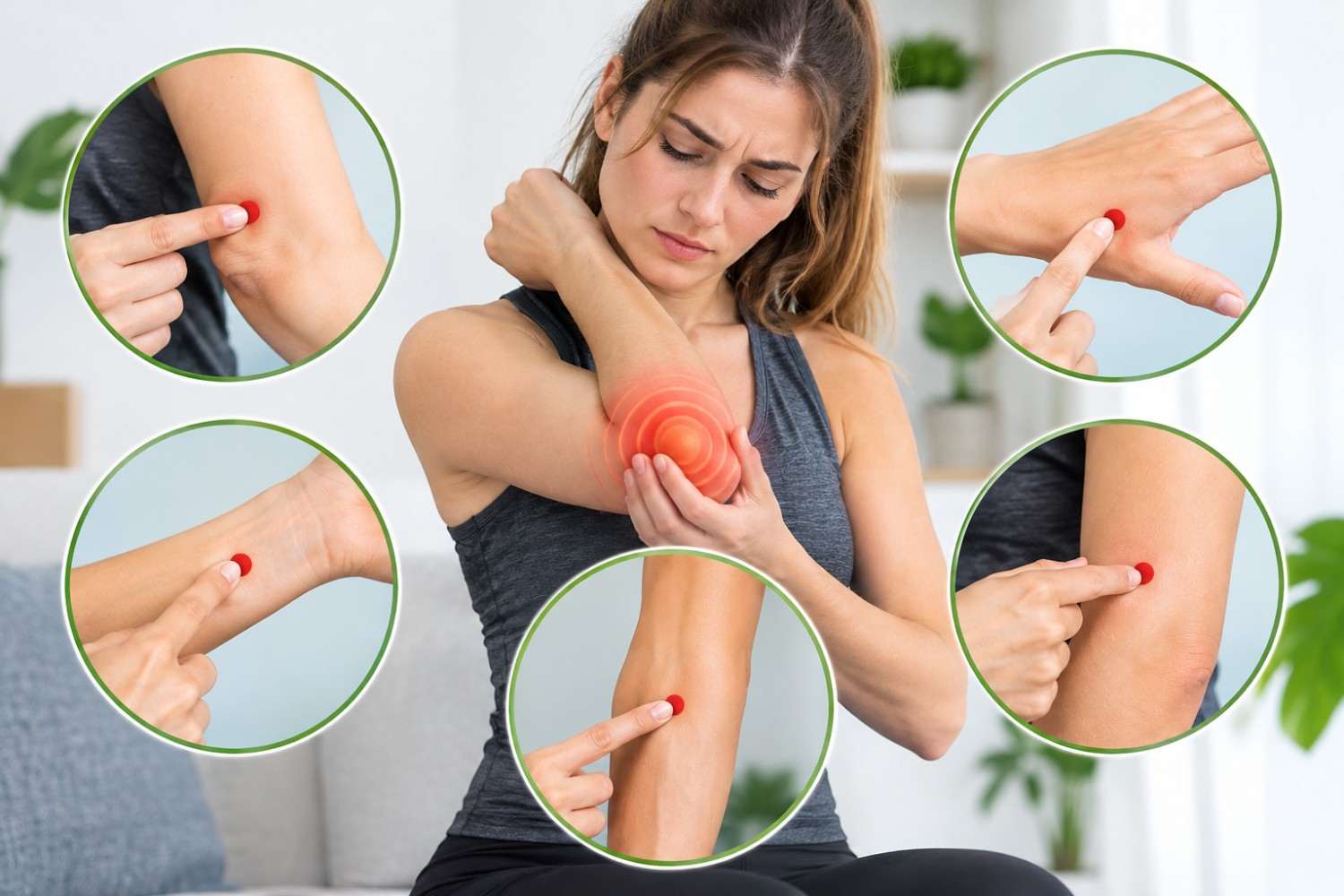 5 Pressure Points for Tennis Elbow Pain Relief
The traditional acupressure points are used for comfort and relaxation. Below are some places to start thinking about relaxing self-massage . None, however, has been proven to be effective in treating tennis elbow.
Shousanli, or LI10, is on the outside of the forearm. It’s a region that’s frequently used for traditional acupuncture for arm pain.
How to locate LI10:
Apply gentle circular pressure for 30-60 seconds. Do not press directly on painful tendons or areas that are swollen or abnormally sensitive.
LI11 (Quchi) is close to the outside end of the bend of the elbow when the arm is bent.
How to locate LI11:
Massage the area for a short period of time, then loosen your arm. If this puts pressure on this area and makes the elbow hurt more, avoid direct pressure to avoid worsening the tennis elbow.
LI4 (Hegu) is the fleshy region between the thumb and forefinger. Traditionally, it has been used to treat various types of discomfort.
How to locate LI4:
This may be the place to have a relaxing self-massage session. However, research has not proven that LI4 is effective at relieving tennis elbow.
Note: Do not stimulate LI4 without consulting a qualified health care provider if pregnant.
Neiguan is P6, located on the inside of the forearm. It has traditionally been linked to the management of nausea and other complementary acupuncture therapy.
How to locate P6:
There is no evidence that P6 is an accepted treatment for tennis elbow. However, a light massage of the forearm might relax your forearm without directly affecting the outer elbow.
Instead of concentrating on just the traditional acupuncture points, you can massage the muscles around your forearm.
Here are some tips on how to use it safely:
Do not apply deep tissue pressure, especially if symptoms are acute or the area is inflamed.
Other natural remedies for Tennis Elbow.
If elbow pain continues, becomes more severe or limits your activities, see a health care provider. Your clinician can evaluate your symptoms and make sure that you don’t have another medical problem causing it.
If you sustain a serious injury, particularly if your elbow is very swollen, misshapen, or weak, and if you have trouble moving it, seek medical attention quickly. The numbness or persistent tingling should also be evaluated.
Some patients may find that acupuncture or acupressure is a helpful alternative therapy. The treatment, however, should be individualized and based upon symptoms and medical history.
Investigate the different forms of complementary pain management.
 Explore Complementary Pain Management Options
Tennis elbow can interfere with work, exercise, and everyday comfort. Gentle massage, activity modification, and guided strengthening may help support recovery. Pressure points can form part of a relaxation routine, but they should not replace evidence-based tendon rehabilitation.
For personalized guidance on acupuncture and complementary pain management, contact Dr. Ma Acupuncture Centre. Our team can help you explore suitable options to support comfort and overall well-being.
To get custom advice on acupuncture and other pain treatments, please call Dr. Ma Acupuncture Centre. We can discuss options to ensure comfort and overall well-being.
No, pressure points cannot cure tennis elbow, and strong evidence supporting acupressure for tendon healing remains limited.
Try gentle massage for 30–60 seconds per point, stopping immediately if pain or tingling increases.
Some studies suggest acupuncture may help certain musculoskeletal pain conditions, but evidence specific to tennis elbow remains uncertain.
Avoid deep pressure over painful tendons; gently massage surrounding muscles and stop whenever discomfort increases.
Seek medical assessment when pain persists, worsens, limits daily activities, or accompanies significant swelling, weakness, or numbness.

Whether you are suffering from arthritis pain, headaches, fatigue, depression, or even tumors, Dr. Ma Acupuncture Centre is the tried and tested provider of Chinese medicinal techniques that yield the desired results with the use of safe and proven effective solutions.
Here at Dr. Ma Acupuncture Centre, we are passionate about helping people feel better as they get healthier. We customize our acupuncture, Chinese Massage, and Gua Sha Therapy services to each individual’s precise needs. This means that you get the exact solution for your unique health issues every time.
So if you are in Ellicott City and are in search of the trusted specialist in acupuncture and Chinese Massage Ellicott City MD folks rely on, there is only one name to keep in mind – Dr. Ma Acupuncture Centre!

For additional questions, either fill out the contact form, send me an email, or give me a call at +1 443-756-0563, +1 301-473-2788
