

Panic attacks can be very intense. Everyday situations may be challenging with a racing heart, fast breathing, sweating, dizziness and sudden fear. While these symptoms can be alarming, there are some methods that can help you get through the episode without being as panicked. A technique is to use pressure points to calm the panic attack naturally.
Traditional technique, Acupressure, uses light pressure on specific points in the body. Some use it in conjunction with breathing exercises, mindfulness and other relaxation techniques. Some of the practices may assist in stress managemen t and promote relaxation.
But studies that have been conducted specifically on the use of Acupressure for panic attacks are limited. Pressure points will not provide instant relief or substitute for mental health professional treatment. Learning how to use them safely can help you practice other relaxation techniques.
A panic attack is a sudden, intense feeling of fear or unease. Symptoms can come on suddenly and may occur without a clear cause.
Common symptoms include:
These symptoms are similar to those of other medical conditions. So if you have new or worsening chest pain, fainting or trouble breathing, especially if you can’t be sure what’s causing it, get emergency medical attention.
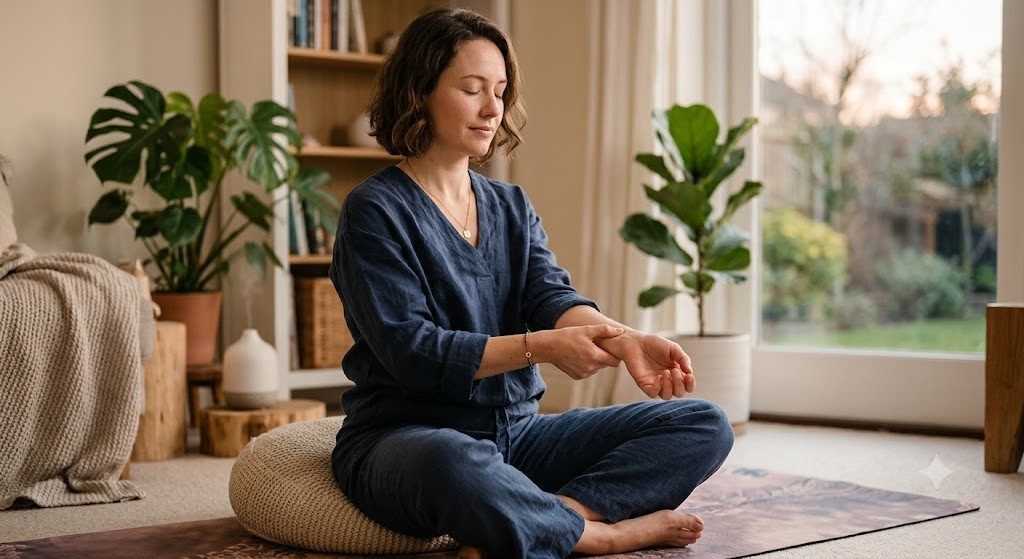 5 Pressure Points to Calm Panic Attacks Naturally
Slow breathing and a comfortable environment may be a calming routine with Acupressure. Apply gentle pressure, not force and discontinue any technique that causes pain.
The Neiguan (Pericardium 6) point is located on the inner forearm. This point is often utilized when treating nausea, but there is not enough evidence to support its use directly for panic attacks.
How to locate P6:
This technique can be calming, particularly when nausea is accompanied by anxiety. Use it in conjunction with relaxed breathing and do not expect it to end a panic attack.
Yintang is located between the two eyes. The region is believed to be linked to relaxation and mental tranquility.
Use this point by:
It’s a simple practice that can be used as a reminder to be mindful. But scientific studies on how stimulating Yintang treats panic attacks are limited.
Heart 7, or Shenmen, is near the crease of the wrist on the little finger side of the palm.
How to locate HT7:
This point is traditionally used for relaxation-related issues. However, there is no evidence that HT7 is effective in preventing or stopping panic attacks.
The Large Intestine 4 (Hegu) is located in the fleshy part between the thumb and the index finger.
How to use LI4:
Hand massage is a comforting procedure for some during stressful times. But there is some evidence that supports LI4 for panic attacks.
Please note: Stimulation of LI4 is not advised during pregnancy unless otherwise recommended by a qualified healthcare professional .
Yongquan is traditionally situated at the top third of the sole, or Kidney 1.
How to locate K1:
Some people can shift their attention from anxiety by focusing on their body sensations. This grounding effect, however, is not a guarantee that the pressure point is effective for panic attacks.
Other natural methods of coping with panic symptoms.
Pressure points work best as optional additions to established coping strategies. Try these practical techniques when you notice anxiety building.
Importantly, do not breathe into a paper bag during a panic attack. This practice can be dangerous if symptoms have another medical cause.
Everyone can experience anxiety at times. If the episodes of panic attacks are frequent, however, it could be a sign of panic disorder or another condition that requires medical evaluation.
If attacks occur on a frequent basis and interfere with work, relationships, sleep or daily functioning, talk to a healthcare professional. Cognitive behavioral therapy (CBT) is a proven treatment for panic disorders. If appropriate, a clinician can also talk about medication. If symptoms include new or severe chest pain, fainting or serious breathing difficulties, get emergency help. Don’t assume that all episodes are caused by anxiety .
 Explore Support for Relaxation and Wellness
Managing panic symptoms often requires a combination of coping skills, lifestyle adjustments, and appropriate professional care. Gentle acupressure may offer a calming ritual, but its effectiveness for panic attacks remains uncertain.
For guidance on acupuncture and complementary wellness approaches, contact Dr. Ma Acupuncture Centre . Our team can help you explore suitable options as part of a broader approach to relaxation and well-being.
P6 and Yintang are traditionally used for relaxation-related concerns, but strong evidence for treating panic attacks remains limited.
Acupressure cannot guarantee immediate relief, although gentle touch may feel comforting when combined with appropriate coping strategies.
Apply gentle pressure for 30–120 seconds, breathe comfortably, and stop if you experience pain or discomfort.
No, pressure points should complement professional care, not replace prescribed medication, psychotherapy, or medical assessment
Seek professional help when attacks recur, disrupt daily life, or cause persistent fear about experiencing another episode.

Whether you are suffering from arthritis pain, headaches, fatigue, depression, or even tumors, Dr. Ma Acupuncture Centre is the tried and tested provider of Chinese medicinal techniques that yield the desired results with the use of safe and proven effective solutions.
Here at Dr. Ma Acupuncture Centre, we are passionate about helping people feel better as they get healthier. We customize our acupuncture, Chinese Massage, and Gua Sha Therapy services to each individual’s precise needs. This means that you get the exact solution for your unique health issues every time.
So if you are in Ellicott City and are in search of the trusted specialist in acupuncture and Chinese Massage Ellicott City MD folks rely on, there is only one name to keep in mind – Dr. Ma Acupuncture Centre!

For additional questions, either fill out the contact form, send me an email, or give me a call at +1 443-756-0563, +1 301-473-2788
